





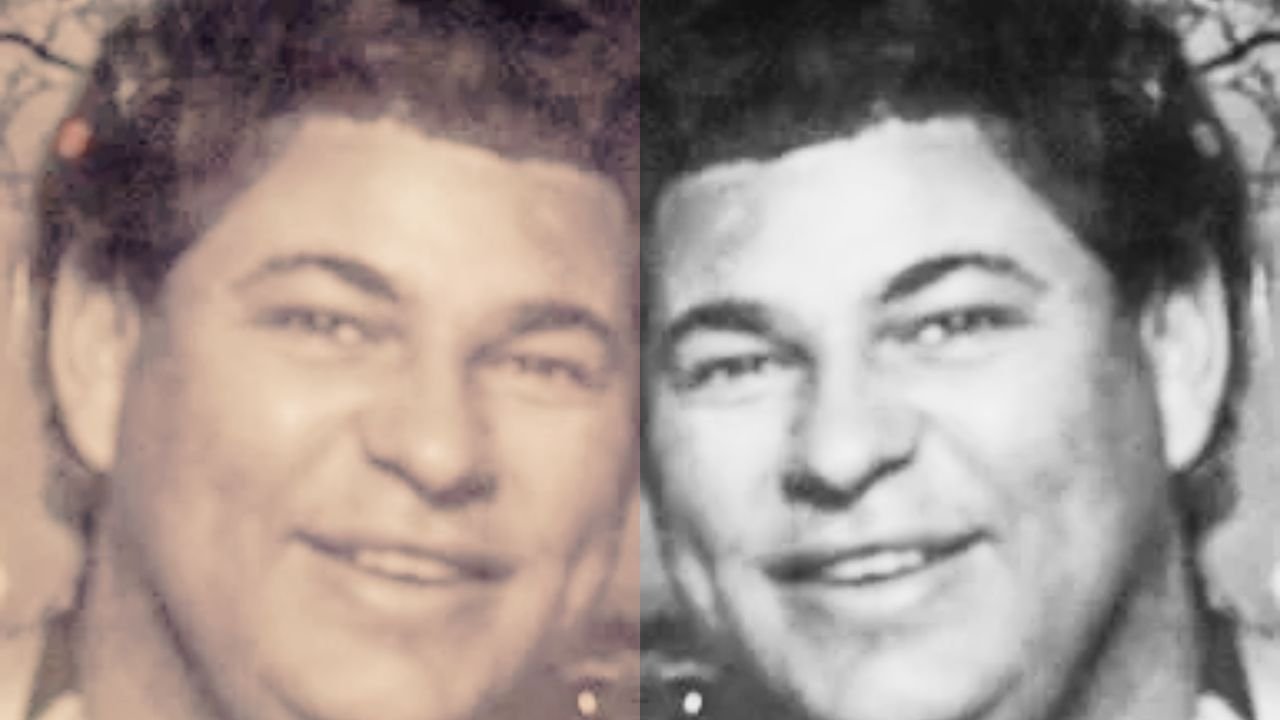
Most people recognize the name Beyoncé instantly. But fewer know that it started as a family surname — one carried by a Louisiana Creole family that eventually settled in Galveston, Texas. And one of the most significant members of that family lived a quiet, private life far from any spotlight.
His name was Lumis Joseph “Skip” Beyoncé Jr. He was the older brother of Tina Knowles-Lawson and the maternal uncle of Beyoncé Knowles-Carter. This article covers who he was, what his obituary tells us about his life, the 1967 police beating that Tina Knowles described in her memoir, and how his family’s Creole roots connect to one of the most recognized names in music.
Who Was Lumis Joseph “Skip” Beyoncé Jr.?
Lumis Joseph “Skip” Beyoncé Jr. was born on July 10, 1949, in Galveston, Texas. He passed away on March 13, 2016, at around 66 years old. Throughout his life, he was known simply as Skip.


He was the older brother of Celestine “Tina” Beyoncé Knowles-Lawson — which makes him Beyoncé’s maternal uncle, not a parent or grandparent. That distinction matters, because online sources sometimes blur the lines between different members of the Beyoncé family tree.
His father was Lumis Albert Beyincé, a Louisiana Creole who relocated to Galveston. His mother was Agnes (also written as Agnez) Derouen/Deréon. It is worth being clear here: Skip and his father share similar names, and the two are often confused in online articles. They are two different people — the father is Beyoncé’s maternal grandfather, while Skip is her uncle.
According to genealogical records and the Wikitree profile for the Beyincé family, Lumis Albert and Agnes had several children together, including Skip, Tina, and at least one other son. Agnes also had children from a prior marriage, which accounts for some of the half-siblings listed in Skip’s obituary.


What His Obituary Tells Us About His Life
The primary source of documented information about Skip’s life is his obituary, published by Carnes Funeral Home in Galveston. It paints a picture of a man who was deeply rooted in his family and community.
He was survived by his wife, Cynthia, and their six children: Terrance, Terrell, Andrea, Lynn, Michelle, and Dominique, along with multiple grandchildren. By any measure, he left behind a large and close family.


Those who knew him remembered him as an avid golfer and a faithful church member. His obituary described him as having a “generous and loving personality” and a “kind and genuine heart” — the kind of language that comes from people who genuinely knew and loved someone.
His listed siblings include Tina Lawson, Roland Beyoncé, Florence Hilliard, Larry Beyoncé, and Selena Rittenhouse. Selena is understood to be a half-sibling through Agnes’s first marriage.
Outside of the obituary and genealogical records, there is very little publicly documented information about Skip’s private life, career, or his personal relationship with Beyoncé. That is worth being honest about. He was not a public figure, and most of what we know comes from a funeral notice and family history sources — not from interviews, profiles, or news coverage during his lifetime.
The 1967 Police Beating Tina Knowles Described in Her Memoir
The main reason many people search for Skip’s name today is a revelation from Tina Knowles. In her memoir, “Matriarch,” she describes a brutal police beating of her older brother Skip in 1967 in Texas.
According to Tina, Skip was arrested while trying to get home after a date. She describes the incident as something that “changed my family forever.” She frames it as a defining moment — one that shaped how her family understood racism and policing in America.
The event took place during a deeply tense period in American history. The civil rights movement was ongoing, and racially motivated police violence against Black Americans in the South was well documented. A young Black man being beaten by police in 1967 Texas was not an isolated horror — it fit a broader, painful pattern of that era.
It is important to stay within what Tina’s memoir and related media coverage confirm. The details above come from Hello! Magazine’s coverage of “Matriarch.” There is no additional public record about legal outcomes, the extent of injuries, or the long-term personal effects on Skip himself. The article respects that boundary and does not speculate beyond what Tina has publicly shared.
What is clear is that the incident left a mark on the family. Tina Knowles has spoken about it in the context of trauma, memory, and her family’s lived experience with racism — not as a historical footnote, but as something real and lasting.
The Beyoncé Family’s Creole Roots and How the Name Evolved
To understand Skip’s place in the family, it helps to understand where the family came from — and where that distinctive name originated.
Skip’s father, Lumis Albert Beyincé, was born on May 22, 1910, in Abbeville or Delcambre, Louisiana, depending on the source. He was the son of Alexandre Boyancé and Marie Olivier — a French-speaking Louisiana Creole family. Louisiana Creole identity typically reflects a blend of French, African, and sometimes Native American heritage, often tied to French colonial Louisiana.
Lumis Albert eventually moved to Galveston, Texas, where he married Agnes Derouen/Deréon and raised their family. According to the Wikitree genealogical profile and supporting sources, he passed away on August 9, 1982, in Galveston. Some online articles list different dates — including a birth year of 1914 and a death year of 2004 — but the Wikitree record and sources like Citimuzik align on the 1910 and 1982 dates. Readers should be aware that conflicting information exists across different websites.
The surname itself went through many spelling variations over generations: Boyancé, Beyince, Beyincé, Buyince — all reflecting phonetic spellings, clerical choices, and the reality that French Creole names were not always recorded consistently in English-language documents.
How “Beyincé” Became Beyoncé’s First Name
Tina Knowles has explained publicly that Beyoncé’s first name is a tribute to her father’s surname. In 2025, she confirmed this in an interview covered by The Jasmine Brand, saying the name was an homage to Lumis Albert Beyincé.
The story behind the choice is meaningful. Officials repeatedly misspelled the family surname over the years. Tina wanted to preserve it — so she used a version of it as her daughter’s first name. That way, even if the surname changed through marriage, the Beyincé name would live on.
It worked. The name Beyoncé is now one of the most recognized single names on the planet. But it started as a Creole family’s surname from rural Louisiana, carried by people like Skip — people who never sought the spotlight.
Beyoncé has publicly honored her maternal grandparents, Lumis Albert and Agnez, sharing old photographs and acknowledging their influence. Both grandparents passed away before she was born, but their legacy — including that surname — clearly matters to her.
A Private Man Connected to a Very Public Name
Lumis Joseph “Skip” Beyoncé Jr. spent his life in Galveston, far from fame. He raised six children with his wife Cynthia, played golf, attended church, and was remembered by those who loved him as generous and kind. He died in March 2016, and most of the world never knew his name.
His story is a reminder that the people behind famous names often live quietly. The Beyoncé name — now attached to one of the most celebrated artists in the world — passed through his family for generations before it ever appeared on a concert stage or album cover.
For readers interested in celebrity family histories, heritage, and the human stories that shape public figures, Blubizmag covers exactly these kinds of profiles with care and context.
Skip’s life, as documented, was not a famous one. But it was part of something larger — a family history rooted in Louisiana Creole culture, migration, resilience, and identity. The 1967 beating his sister described in her memoir shows that his life also carried real pain. And the name his niece carries to this day shows that his family’s legacy has traveled further than any of them might have imagined.
Also Read: