





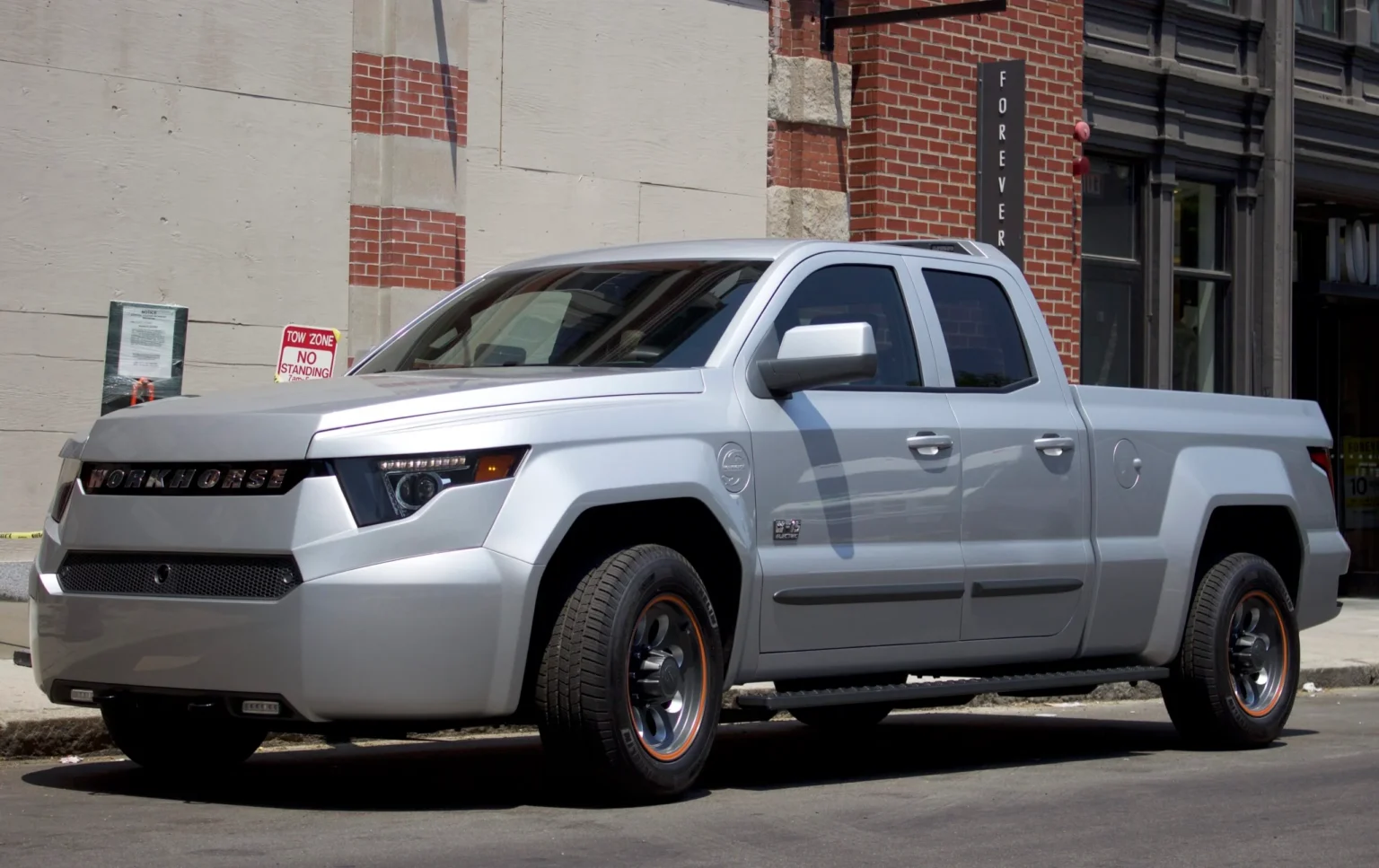
If you’ve been watching Workhorse’s stock or following EV news lately, you’ve probably asked yourself whether this company is on its last legs. And honestly, it’s a fair question. The stock has taken a brutal beating, there’s been talk of Nasdaq delisting, and a merger came out of nowhere. It’s a lot to make sense of.
This article gives you a clear, honest look at where Workhorse actually stands right now — what the company does, what the numbers say, what the Motiv merger means, and how to think about the “going out of business” question without falling into panic or hype.
What Workhorse Actually Does (And Where It Stands Today)
Workhorse started out as AMP Electric Vehicles before evolving into what it is today — a company focused on commercial electric vehicles and telematics software for last-mile delivery fleets. They’re not building electric cars for everyday drivers. Their target customers are businesses that run medium-duty delivery fleets.


The company is headquartered in Sharonville, Ohio, and is still listed on Nasdaq as of the latest available information. No Chapter 11 or Chapter 7 bankruptcy filing has been made. They’re still operating, still reporting results, and still announcing corporate moves.
If you only heard of Workhorse during the USPS contract buzz a few years back, know that the company has changed a lot since then. It’s worth looking at the current picture before drawing any conclusions.
The Financial Reality — Why People Are Worried
Here’s where things get uncomfortable. Workhorse’s revenue has actually grown. Full-year revenue jumped from around $7 million to $21.2 million year-over-year. On the surface, that sounds like real progress.


But here’s the thing — growing revenue doesn’t mean growing out of trouble. Think of it like a small shop that doubles sales from $20,000 to $40,000. That sounds great, right? But if your rent, payroll, and loan payments total $80,000, you’re still losing money. That’s roughly the position Workhorse is in. The company still isn’t profitable, and cash burn has been a persistent problem.
One independent model puts Workhorse’s probability of financial distress over the next 24 months at around 79–80%. That’s not a guarantee of bankruptcy — models like this aren’t crystal balls. Think of it like a weather forecast showing an 80% chance of heavy rain. It doesn’t mean it will definitely rain, but you’d be unwise not to grab an umbrella.


The quick ratio — a measure of how well a company can cover its short-term debts with liquid assets — sits at just 0.38. Anything below 1.0 is a warning sign, and 0.38 is pretty far below that line. These numbers explain why investors are nervous.
The Nasdaq Delisting Scare and the Reverse Stock Split
Earlier this year, Workhorse faced a very real threat of being kicked off Nasdaq. Its share price had fallen below the $1.00 minimum bid requirement that Nasdaq sets for listed companies, and the deadline to fix it was March 31, 2025.
To solve that problem, Workhorse executed a 1-for-12.5 reverse stock split, effective March 17, 2025. What that means in plain terms: every 12.5 shares you held became 1 share. The number of shares shrinks, the price per share goes up, and Nasdaq compliance is restored — at least for now.
But here’s the important part that often gets lost: a reverse split doesn’t fix anything underneath the hood. It’s a bit like changing the number on a scoreboard without changing how the team is actually playing. The business still has the same costs, the same cash challenges, and the same uphill climb to profitability.
If the share price drops again — which is a real possibility given the financial pressure the company is under — Workhorse could face another delisting threat. The reverse split bought time. It didn’t buy a turnaround.
The Motiv Electric Trucks Merger — What It Means for Workhorse’s Future
The biggest news in Workhorse’s recent story is the planned merger with Motiv Electric Trucks. Workhorse announced plans to merge its operations with Motiv, and the combined company would continue to operate under the Workhorse name. The deal is expected to close in Q4 2025, pending shareholder and regulatory approvals.
Here’s how the structure works: Motiv merges into a new Workhorse subsidiary, and in exchange, Motiv’s owners receive newly issued shares in Workhorse. That means existing shareholders get diluted — their ownership percentage shrinks.
Think of it this way. If you own 100% of a small bakery and bring in a new partner who injects capital and brings new recipes, but takes 60% of the equity in return — you now own 40% of a hopefully larger and more capable bakery. You gave something up, but the idea is that the combined business is worth more than each piece alone.
Management believes the merger brings scale, a more competitive product lineup, and real cost synergies. The target is more than $10 million in annualized cost savings by the end of 2026. And on a combined pro forma basis, the two companies’ revenue would be around $34 million — up from about $13.7 million previously.
Management also believes that capturing roughly 1% of the medium-duty truck market could get the company to cash-flow breakeven by 2028. That’s the goal. Whether they get there is a very different question — these are projections, not promises.
Some retail investors and forum discussions have pointed out something worth taking seriously: if the Motiv deal falls apart, Workhorse would be in a very difficult spot. The concern is that without the merger and the fresh capital it’s meant to bring, the company has limited options and a narrow runway. That’s not an official statement — but it reflects genuine anxiety in the investor community, and it’s not without basis.
So Is Workhorse Going Out of Business?
This is the question everyone’s really asking. And the honest answer is: not yet, but the risk is real and shouldn’t be waved away.
Workhorse has not filed for bankruptcy. It is still operating, still reporting, and still working toward a significant corporate transaction. Those are facts. But the financial pressure is serious, and the path forward depends heavily on things that haven’t happened yet — most importantly, the Motiv merger closing and the combined company actually executing on its plan.
“Going out of business” isn’t always a light switch moment. There’s actually a spectrum of outcomes here:
- Successful turnaround: The Motiv merger closes, synergies materialize, orders grow, and the company edges toward breakeven by 2028.
- Slow dilution: The company stays alive but keeps issuing new shares to raise cash. The business survives, but existing shareholders see their stake shrink over and over.
- Bankruptcy or wind-down: If financing dries up, the merger collapses, or sales stall, a restructuring under Chapter 11 becomes a real possibility.
None of these outcomes is decided yet. Workhorse is at a crossroads, not a cliff — but it’s close enough to the edge that it pays to watch carefully.
If you’re an investor or just someone keeping an eye on the commercial EV space, it’s worth checking Workhorse’s latest filings and press releases before making any decisions. The situation is evolving, and what’s true today may look different in three to six months depending on how the merger progresses.
For more business coverage and company breakdowns like this one, you can follow along at BluBizMag.
The Bottom Line
Workhorse is not out of business today. But it’s also not out of the woods. Revenue is growing, which matters. The Motiv merger could give the company a real chance at becoming something sustainable. And management has a plan, even if that plan is still just a plan on paper.
At the same time, the financial warning signs are hard to ignore — weak liquidity, no profitability, a high modeled probability of distress, and a share price that needed a reverse split just to stay listed. These aren’t small concerns.
The fair takeaway is this: Workhorse is fighting to survive, not closing its doors. Whether the fight works out is something only the next year or two will answer.
Read Also: