





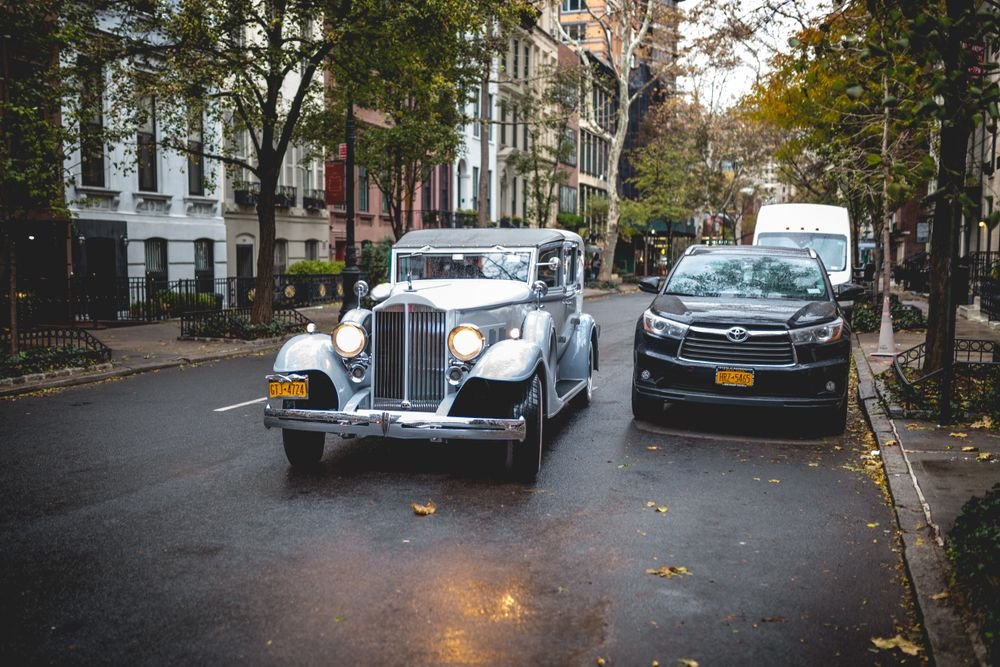
Packard isn’t going out of business — it already did. The last Packard-badged vehicle rolled off a production line in 1958, and the name was quietly dropped from corporate use by 1959. If you searched this question expecting current news, the story is actually much older than you might think.
This article covers what Packard was, when and why it failed, how a merger with Studebaker accelerated its end, what the brand’s legacy looks like today, and what practical business lessons the story holds. We’ll also clear up a common confusion: Packard Motor Car Company and Hewlett-Packard are two completely separate businesses with no connection to each other.
Packard Was Once America’s Most Prestigious Car Brand
Packard Motor Car Company was founded in 1899 in Warren, Ohio, and moved to Detroit in 1903. By the 1920s and 1930s, it had become the genuine standard for American luxury automobiles. Models like the Packard Twelve and Super Eight were legitimate competitors to Rolls-Royce in terms of reputation and quality.


The company had real engineering credentials. Packard produced high-quality straight-eight engines, helped develop early automatic transmissions, and built aircraft engines during World War II. This wasn’t a fringe operation — Packard was a household name among wealthy buyers for decades.
That makes the collapse more striking. A company with that kind of reputation and engineering depth still couldn’t survive. Understanding why is worth the time.
Packard Is No Longer in Business — Here Is the Exact Timeline
The end of Packard didn’t happen on a single date. It unfolded in stages, and the timeline depends partly on what you count as a “true” Packard.


- June 25, 1956: The last Packard built at Packard’s own Detroit plant, on its own platform, rolled off the line. Most automotive historians consider this the real end of the brand.
- 1956–1958: Cars continued to be sold under the Packard name, but they were assembled at Studebaker’s South Bend, Indiana facility using Studebaker platforms. Many historians call these rebadged Studebakers.
- July 16, 1958: The last Packard car was officially produced by the Studebaker-Packard Corporation.
- August 19, 1958: Two Packard-badged Studebaker trucks were shipped to Argentina — widely considered the final vehicles to carry the Packard name.
- 1959: The Packard name was removed from the corporate logo and dropped from use entirely.
So if someone asks when Packard went out of business, the honest answer is: it depends on what you mean. The authentic Packard ended in mid-1956. The brand name lingered until 1958 and 1959 in a diminished form.
Why Packard Failed — The Real Business Reasons
The failure wasn’t caused by one mistake. Several factors came together over time, and the combination proved fatal.


Scale Was Always a Problem
Packard could never match the production volume of GM, Ford, or Chrysler. Without scale, you can’t spread costs across enough units. That made it nearly impossible to compete on price while still maintaining the quality the brand was known for.
The Big Three had massive advantages in manufacturing, distribution, and marketing budgets. Packard was always fighting uphill.
The One-Twenty Debate
In the 1930s, Packard introduced the One-Twenty — a mid-priced model aimed at surviving the Great Depression. Some historians blame this decision for diluting the luxury brand. The argument is that once Packard started selling affordable cars, it couldn’t credibly charge premium prices for its top models.
But other analysts push back on that view. They argue the real financial problem was actually the expensive “Senior” models — the Eight, Super Eight, and Twelve. These cars were reportedly underpriced relative to what they cost to build, which quietly drained the company’s finances. In other words, the prestige cars themselves may have been a bigger drain than the cheaper ones.
This debate matters for business owners. Brand dilution is a real risk, but pricing your premium product incorrectly can be just as damaging.
Postwar Retooling Problems
Packard invested heavily in wartime defense production during World War II. That was necessary at the time, but it left the company undercapitalized when the war ended. While GM and Ford moved quickly to retool for modern civilian vehicles, Packard struggled to fund the transition.
The company was slow to adopt modern styling, reliable V8 engines, and updated automatic transmissions — all things that consumers in the 1950s increasingly expected. Being late on those features hurt sales at a critical moment.
Conservative Management and the 1958 Recession
Leadership made cautious decisions when bold moves were needed. Investment windows were missed. Modernization was delayed. When the 1958 recession hit the U.S. economy, independent automakers with weak finances were hit hardest. Packard had no cushion left.
The Studebaker Merger Made Things Worse, Not Better
In 1954, Packard merged with Studebaker to form the Studebaker-Packard Corporation. The idea was to combine two independent automakers into a stronger entity that could better compete with the Big Three.
It didn’t work. Studebaker was also financially weak, and combining two struggling companies didn’t solve the problems either one had on its own. Instead, it spread the financial stress further and complicated decision-making.
After the merger, Packard production in Detroit was shut down. Later “Packard” models were built on Studebaker platforms, which eroded whatever remained of Packard’s distinct engineering identity. Customers noticed, and sales reflected it.
This is a classic example of a weak-weak merger — two companies hoping that combination will create strength that neither possesses separately. It rarely works. A struggling business doesn’t automatically become healthy because it merges with another struggling business. Both parties need to bring something genuinely complementary to the table.
What Packard’s Legacy Looks Like Today
Packard no longer exists as a car manufacturer, and no major automaker currently produces vehicles under the Packard name. There have been small-scale tribute projects and replica efforts over the years, but nothing approaching a real commercial revival.
The brand’s legacy survives mainly through collectors and enthusiast communities. Models like the Packard Twelve and Caribbean are prized collector vehicles. Owner clubs and automotive museums keep the history alive. Some former Packard dealerships have been converted into museum spaces.
For those curious about business history and brand analysis, resources like Bloom Business Mag cover how companies rise, fall, and occasionally find second lives in different forms.
Packard’s engineering contributions — straight-eight engines, early automatic transmission work, wartime aircraft engines — are still recognized by automotive historians. The company left a real technical footprint, even if the business itself couldn’t survive.
Quick Clarification: Packard vs. Hewlett-Packard
Some people searching “Is Packard going out of business” may be thinking of Hewlett-Packard, the technology company known for computers and printers. These are two entirely separate companies with no connection to each other.
Hewlett-Packard (HP) was founded in 1939 in California and split into two companies in 2015: HP Inc. and Hewlett Packard Enterprise. Both still operate today. The Packard in Hewlett-Packard refers to David Packard, one of the co-founders — not the car company.
What Business Owners Can Take From This Story
Packard’s decline holds real lessons that apply well beyond the auto industry.
- Reputation doesn’t replace scale. Being known for quality helps, but it doesn’t protect you if your cost structure is unworkable.
- Pricing your premium product incorrectly is dangerous. Underpricing high-cost offerings — even prestigious ones — can quietly destroy a business from within.
- Merging with another weak company rarely creates a strong one. Before any merger, understand exactly what financial and operational problems each party is bringing to the table.
- Delayed investment in product development has a compounding cost. Every year Packard was late on V8 engines and modern styling was a year where customers chose competitors instead.
- Economic downturns expose weak financial positions. Companies with no financial cushion are the most vulnerable when markets contract.
Packard had genuine strengths — engineering talent, brand prestige, and loyal customers. But those strengths couldn’t overcome structural financial problems, slow product decisions, and a failed merger strategy. The company didn’t fail because its cars were bad. It failed because the business behind those cars ran out of runway.
That’s a distinction worth keeping in mind for any business that believes a great product is enough on its own.
Read Also: